Centralization Risk
Single-issuer treasuries, opaque redemption rules, and discretionary freezes concentrate power—and risk—in one place.
Users inherit policy shocks, banking rails friction, and counterparty exposure they cannot fully price.

USDXGO is a collateral-backed decentralized stablecoin designed for lending, payments, and real-world trade. Built for treasuries, protocols, and merchants who need predictable value without giving up transparency. Risk parameters, mint limits, and redemption paths are intended to stay inspectable on-chain—so finance and engineering can agree on the same source of truth.
Trust layer
From day one we prioritize auditability, chain compatibility, and composable DeFi primitives—so partners can integrate with clarity, not guesswork.


Compatibility
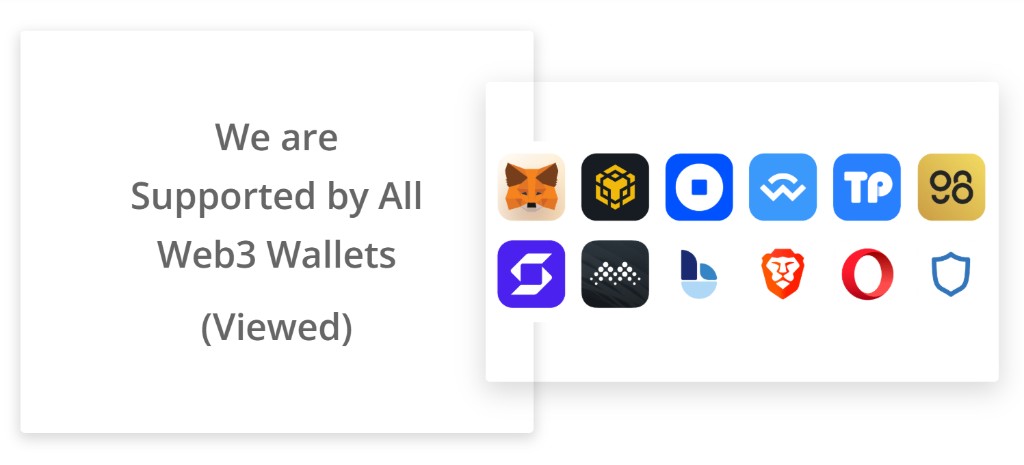
USDXGO is designed for EVM tooling and common wallet connection patterns. If you can sign and send transactions on an EVM chain, you can interact with USDXGO flows.
Challenge
The market is crowded with “stable” labels—but resilience, transparency, and utility rarely show up together. USDXGO is built to close that gap.
Single-issuer treasuries, opaque redemption rules, and discretionary freezes concentrate power—and risk—in one place.
Users inherit policy shocks, banking rails friction, and counterparty exposure they cannot fully price.
When reserves are off-chain or reporting is delayed, “proof” becomes a quarterly PDF—not a live, verifiable state.
Without consistent attestations, risk managers cannot stress-test scenarios or build reliable automation.
Many stable assets live almost entirely inside speculative loops, disconnected from payroll, invoices, and trade settlement.
That limits real adoption: businesses need stable units that plug into workflows—not only charts.
USDXGO
USDXGO combines economic backing with protocol-native controls: mint when collateral is sound, burn when debt is repaid, and keep risk parameters visible on-chain.
Supply expands and contracts with collateralization—not narrative. Vault health, ratios, and liquidations are designed to be observable and automatable.
Governance and operations move toward minimized trust assumptions: multisigs, timelocks, and phased parameter control reduce single-operator failure modes.
USDXGO targets lending rails, settlement windows, and B2B workflows—where predictable pricing and audit trails matter as much as APY.
Mechanics
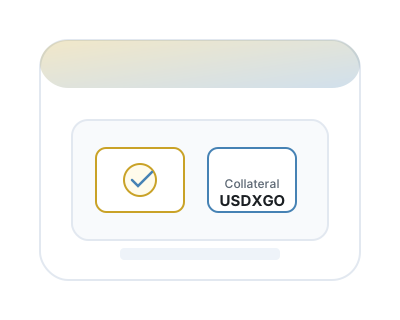
Supply is dynamically managed through mint and burn mechanics.
Users deposit eligible collateral, mint USDXGO up to policy limits, route liquidity across DeFi venues, then repay to release collateral and burn stable supply—keeping the system self-balancing over time.
Integrators can treat each step as a composable primitive: the same minted balance may pass through swaps, vault strategies, or payout batches—then unwind in one repayment when collateral is no longer needed as backing.
Utility
Whether you are running a credit desk, a merchant treasury, or a DAO budget—USDXGO is meant to sit where stability meets operations.
The same unit can sit in a lending pool in the morning, settle an invoice by afternoon, and rebalance liquidity overnight—without forcing your finance team to juggle incompatible tick sizes or reconciliation rules.


Supply liquidity or borrow against collateral with predictable stable unit accounting—ideal for leveraged strategies and inventory financing.
Integrate with existing lending markets or route through curated risk tranches as the ecosystem matures.

Settlement layer for invoices, payroll, and cross-border flows where FX volatility and reconciliation delays are expensive.
Batch payouts, escrow releases, and merchant settlement windows map cleanly to deterministic transfers.

Document-backed workflows and milestone-based releases—aligned with attestations and partner risk policies.
Use USDXGO as the neutral leg while goods, shipping, and compliance events settle off-chain.

Deep pairing with majors and yield-bearing collateral helps treasuries rebalance without fragmenting books across dozens of units.
Routing, aggregation, and LP incentives are designed to be transparent and monitorable on-chain.
Economy
Dynamic supply — mint and burn tied to collateralization. Allocation designed for long-term liquidity, operational runway, and partner growth.
Emissions, partner grants, and reserve releases are staged so circulating supply grows with measurable usage—not vanity listings. Treasury movements aim to stay legible to analysts and community monitors alike.
The chart is illustrative: final percentages may shift with governance and launch sequencing, but the liquidity-first principle remains—markets need depth before optimization.
Illustrative allocation

How allocation, circulation, and governance feedback are designed to reinforce each other over time.
Risk
Parameters below communicate how the system intends to behave under stress—always verify live values on-chain before taking positions.
Healthy positions stay inside oracle confidence bands; as health deteriorates, automated winding and liquidation ordering are meant to protect lenders and reduce disorderly sell pressure on the peg.
 150%
Collateral Ratio
150%
Collateral Ratio
Over-collateralized design to absorb volatility before solvency is threatened. Effective ratio can vary by asset class.
 120%
Liquidation Threshold
120%
Liquidation Threshold
Automated wind-down paths when positions breach safety buffers—protecting lenders and the broader peg mechanism.
Oracle
Pricing
Oracle-based pricing with redundancy and deviation checks where applicable—reducing single-feed manipulation risk.
 Auto
Risk management
Auto
Risk management
Parameterized caps, rate curves, and circuit breakers aligned with governance and incident response playbooks.

Conceptual bands only—always read deployed parameters, oracle sources, and liquidation math from live contracts.
Plan
A staged rollout reduces operational risk: ship core mechanics first, then expand credit rails, enterprise workflows, and decentralized governance.

Core contracts, mint/burn, oracle wiring, initial liquidity pools, public documentation, and monitoring dashboards for community transparency.
Integrated borrow markets, risk tiers, liquidation auctions, and improved UX for power users and treasuries managing multiple positions.
Trade finance pilots, KYB-friendly APIs, settlement reporting, and partner integrations for merchants and fintech bridges.
Progressive decentralization of parameters, grants programs, research councils, and emergency procedures hardened through on-chain votes.
Assurance
Security is not a launch-day checkbox—it is an ongoing discipline across audits, operational controls, and transparent upgrade paths.
We treat change management as part of the threat model: migrations, parameter updates, and dependency bumps each get proportionate review—so improvements do not accidentally reopen closed risks.
Payments
This project includes a ready-to-wire card payment flow using Stripe Checkout (session creation + success/cancel pages + webhook endpoint).
Pick a plan to start a test checkout. The backend returns a Checkout URL and the browser redirects you to Stripe’s hosted payment page.
$19
Per month · pilots & small teams
$79
Per month · growing teams
$249
Per month · custom integrations
Stripe endpoints: payment/checkout.php (creates session), payment/webhook.php (events).
Configure STRIPE_SECRET_KEY and STRIPE_WEBHOOK_SECRET.
Whether you are launching a pool, onboarding a treasury, or exploring integrations—start with the app, read the whitepaper, or contact the team for partnership review.
By continuing you acknowledge DeFi risks. Nothing here is financial advice.

Docs
The whitepaper covers the economic model, risk parameters, oracle strategy, governance roadmap, and security assumptions. Download when the final PDF is published.